-
 USD
USD 
 INR
INR

Hosticon vs Popular Hosting...
Hosticon vs Popular Hosting Providers
When you’re building a website — whether it’s a personal blog, an online portfolio, or a full-blown e-commerce store — choosing the right web host can make or break your experience. There are tons of options out there, and while many are well-known, a rising name in the space is Hosticon. In this post, we’re taking a friendly, detailed, and honest look at how Hosticon stacks up against some of the most popular hosting providers available today — covering speed, support, pricing, and features.
Why This Comparison Matters
Before we dive into the specifics, let’s take a moment to talk about what really makes a hosting provider worth your hard-earned money. You want:
Fast and reliable performance — because slow websites lose visitors.
Responsive support — especially when something breaks at 2 a.m.
Clear pricing — no surprise renewal fees.
Useful features — everything from backups to staging environments.
With that in mind, let’s meet the competitors.
Performance & Speed: Who Loads Fastest?
A website’s speed isn’t just about user satisfaction — it affects search rankings, conversions, and bounce rates
Pricing: How Much Will You Actually Pay?
Pricing is one of the most misunderstood parts of web hosting. Many providers advertise a low monthly price, but renewals can be dramatically higher.
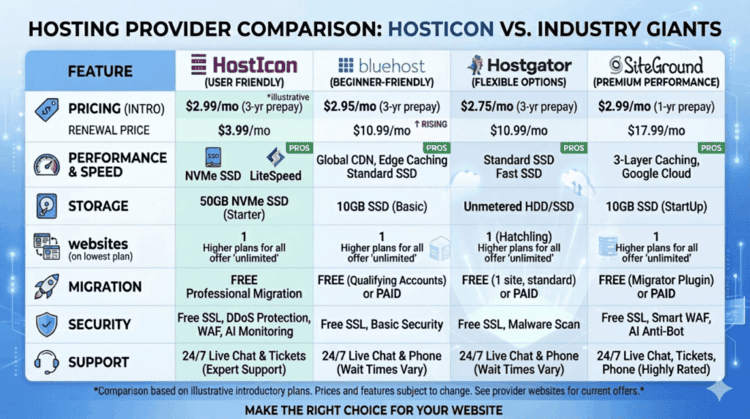
Here’s a snapshot of how things compare (Note: All prices approximate and depend on promotions, plan, and billing cycle):
Features: What’s Included?
A hosting provider’s feature set determines what you can do without extra costs — and saves you headaches later.
HostIcon
Hosticon uses a global CDN (Content Delivery Network) and modern server infrastructure optimized for performance. Their servers are configured to serve content quickly, and their tech stack supports the latest PHP versions and caching layers which help dynamic sites load swiftly.
Why this matters:
Improved page load times
Better Google search performance
Stronger user engagement
Hosticon Support
Users often mention Hosticon’s 24/7 live support and quick ticket turnaround times. Support staff are generally helpful even with technical issues like DNS setups or migrations.
Perks:
24/7 chat & ticket support
Knowledge base & tutorials
Proactive help with migrations
Hosticon’s pricing is straightforward and competitive. Their entry-level plans are very affordable, and they tend to keep renewal pricing close to initial rates — which is rare in the industry.
Typical pricing highlights:
Entry-level shared plans are budget-friendly
Transparent renewal terms
No hidden fees
Hosticon Features
Hosticon includes a robust set of features right out of the box:
Free SSL certificates
Automated backups
One-click installers (WordPress, Joomla, etc.)
CDN integration
Easy-to-use control panel
Additionally, Hosticon’s plans tend to scale well if your site grows (e.g., adding more traffic, staging environments, etc.).
Bluehost
Bluehost offers stable performance for most small to medium websites. It’s widely recommended for WordPress, but in independent speed tests, it sits slightly below premium hosts — especially under high traffic.
Strengths:
Solid uptime
Easy WordPress setup
Bluehost Support
Bluehost provides 24/7 support via phone, chat, and email. While support is reliable, wait times can vary depending on peak hours and the complexity of your request.
Bluehost Pricing
Bluehost advertises low intro pricing, but renewal rates can be substantially higher — especially if you don’t lock in a long-term term plan.
Bluehost Features
Bluehost offers:
Standard features like free SSL
WordPress optimizations
Site builders included
While solid, advanced features can require upgrades or add-ons.
SiteGround
SiteGround is a strong performer with proprietary caching and a globally distributed network. In many third-party benchmarks, SiteGround consistently delivers excellent load speeds.
Standout features:
Ultra-fast server response
NGINX, SSD storage, and advanced caching
SiteGround Support
SiteGround’s reputation for support is excellent. Their team is known for fast responses and deep technical expertise, especially for WordPress users. They also offer live chat and in-depth guides.
SiteGround Pricing
SiteGround is positioned more as a premium provider — so while prices are higher than many hosts, the performance and support often justify the cost.
SiteGround Features
SiteGround excels here — with priority features such as:
Built-in caching
Staging environments
Daily backups
Developer tools like SSH
This makes it excellent for both beginner and advanced users.
HostGator
HostGator tends to be reliable in terms of uptime, but speed performance is variable depending on the plan. It’s good for budget sites but not the best choice for high-traffic or complex applications.
HostGator Support
HostGator offers 24/7 support, but similar to Bluehost, several users report longer wait times and inconsistent support quality — especially on budget plans.
HostGator Pricing
HostGator often offers the cheapest intro prices among mainstream hosts, but similar to Bluehost, renewals spike after the first term ends.
HostGator Features
HostGator covers all the basics like SSL, control panel, and website builders. But features beyond the basics often cost extra.
All-in-One Comparison – Hosticon vs Popular Hosting Providers
| Criteria | Hosticon | Bluehost | SiteGround | HostGator |
|---|---|---|---|---|
| Speed & Performance | Optimized servers with CDN support and modern stack. Very good real-world loading speed for small and medium websites. | Stable performance, but average load speed under heavy traffic. | One of the fastest shared hosting platforms thanks to advanced caching and infrastructure. | Acceptable speed on basic plans; performance drops when traffic increases. |
| Uptime & Reliability | Reliable uptime for business and personal sites, suitable for continuous operations. | Good uptime record overall. | Excellent uptime and infrastructure stability. | Good uptime, but depends heavily on the plan selected. |
| Customer Support | 24/7 chat and ticket support. Helpful with migrations, DNS, and setup issues. Response times are generally fast. | 24/7 chat and phone support. Quality is decent, but complex issues may take longer. | Industry-leading support with highly technical staff and very fast response times. | 24/7 support available, but mixed user experience and longer queues at peak times. |
| Pricing Transparency | Simple and affordable pricing. Renewal rates remain close to the initial price. | Very low introductory price, but noticeably higher renewal cost. | Premium pricing from the start and at renewal. | Very cheap entry plans, but sharp price increase after the first term. |
| Overall Value for Money | Strong balance of price, performance, and included features. | Good value only during the first billing term. | High quality, but value mainly suits users willing to pay more. | Attractive for budget users, but fewer included features. |
| Free SSL | Included | Included | Included | Included |
| Backups | Automated backups included in plans. | Limited or paid backups on many plans. | Daily backups included by default. | Often available as paid add-ons. |
| WordPress & App Installers | One-click WordPress and popular CMS installers. | One-click WordPress with beginner-friendly setup. | Optimized WordPress environment and tools. | One-click installers available. |
| Developer & Advanced Tools | Suitable for growing projects and small businesses. | Limited advanced tools unless you upgrade. | Staging, SSH, Git tools, and advanced caching included. | Mostly basic tools unless you upgrade plans. |
| Ease of Use | Clean control panel and simple onboarding. | Very beginner-friendly dashboard. | Slight learning curve, but powerful interface. | Easy for beginners, especially for simple sites. |
| Best Suited For | Bloggers, startups, and businesses wanting long-term affordable hosting with good performance. | First-time website owners who want a very easy start. | Developers, agencies, and performance-focused websites. | Budget users building small or personal websites. |
✔️ Best overall value for long-term use: Hosticon
✔️ Best for premium performance (higher price): SiteGround
Final Thoughts
If you’re looking for a balanced host with strong performance, honest pricing, and dependable support, Hosticon deserves a serious look — particularly for small to medium websites that want to grow without surprise costs.
SiteGround remains a heavyweight choice if your priority is top-tier speed and cutting-edge features, and you’re comfortable paying a premium.
Bluehost and HostGator are solid choices for simple or budget-friendly sites, but may feel limited or cost-heavy once you factor in renewals and add-ons.
Ready to Choose?
Whether you’re launching your first website or scaling your business online, making the right hosting choice matters. For many users who want speed, reliability, transparency, and support without sticker shock, Hosticon delivers excellent value — and often outperforms more expensive competitors on real-world metrics.
If you want a well-rounded hosting provider that combines:
good speed,
responsive support,
fair long-term pricing,
and practical features,
Then Hosticon stands out as the most balanced choice in this comparison.
SiteGround clearly leads in raw performance and advanced tools, but it comes at a noticeably higher cost.
Bluehost and HostGator remain popular mainly because of their low entry pricing and ease of use, but their higher renewal prices and paid add-ons can surprise many users later.
This single comparison table can be dropped directly into your blog so visitors can compare everything at once—without jumping between multiple sections.

